
How to scale a small business?
By Ahad Miah, CEO at ATS Accountants
When I look back on my own journey – from working within large corporates such as O2, Telefónica, eGain and BT, to running and advising businesses myself – one thing becomes very clear:
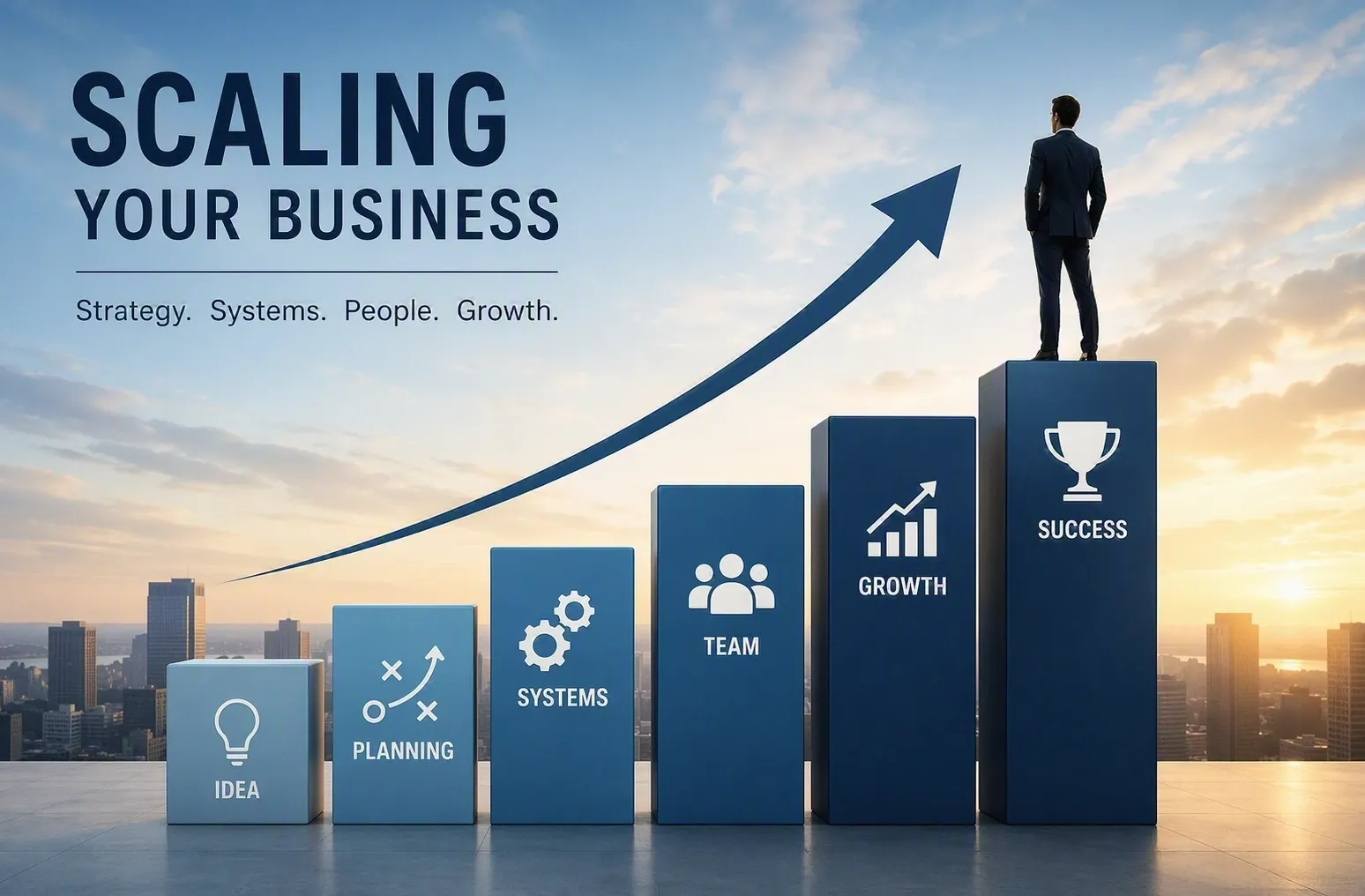
Scaling a business isn’t about size. It’s about how you operate.
I started my first business at 17, so I’ve experienced first-hand the realities of building something from the ground up. At the same time, working within larger organisations showed me a completely different way of operating – more structured, more disciplined, and ultimately more scalable.
What I’ve found over the years is this:
Most small businesses don’t struggle because they lack opportunity – they struggle because they outgrow the way they operate. This is reflected in wider UK business data. According to the ScaleUp Institute, scale-up businesses account for just 0.5% of the SME population but generate 58% of UK SME output worth around £1.3 trillion. The difference is rarely about size alone – it’s often about having the right structures, systems and decision-making processes in place. (Source: Executive Summary – ScaleUp Institute)
The encouraging part is that many of the principles used in larger organisations can be applied at any level – without overcomplicating things. Our article on The Hidden Cost of Business Growth is also recommended if you’re growing your business and want to avoid the pitfalls.
1. Know Your Numbers – But More Importantly, Use Them
One of the biggest differences I noticed early on in larger organisations is that reporting isn’t just produced – it’s actually used.
There are regular review cycles where performance is questioned, trends are analysed, and decisions are made based on that information.
In smaller businesses, it’s often very different.
I’ve worked with business owners who are turning over healthy revenue and working incredibly hard – but when you sit down and ask simple questions around profit margins, cost drivers or cash flow trends, the answers aren’t always clear.
In some cases, the business is growing – but becoming less efficient and less profitable at the same time.
That’s where issues start to develop.
You don’t need complex systems to fix this. What makes the difference is consistency. A regular monthly or quarterly review, focusing on a handful of key numbers, can completely change how you understand your business. Our guide to regular financial reviews can be very helpful in guiding small business owners in getting started – Quarterly Financial Review Guide for Small Businesses
The turning point for most businesses is when they stop guessing – and start making decisions based on clear data. This is when an outsourced or fractional FD (Finance Director) can add immense value to your business – and we provide outsourced/ fractional FD service at ATS Accountants – Virtual Finance Director.
2. Growth Without Structure Creates Pressure, Not Progress
A common assumption is that scaling simply means doing more of what’s already working. In reality, I’ve often seen the opposite happen.
Businesses grow, demand increases, more clients come in – but instead of things improving, everything starts to feel more difficult. Deadlines slip, work becomes inconsistent, and stress levels increase.
The issue isn’t lack of opportunity. It’s lack of structure.
In larger organisations, there is always a clear way of doing things. Processes might evolve over time, but there is consistency behind how work is delivered.
In smaller businesses, processes often exist – but only informally. Things get done, but in slightly different ways each time, depending on who is doing them.
That works up to a point. But beyond that, growth starts to expose those gaps.
What I’ve seen work well is not overcomplicating things, but simply asking: “If someone new joined tomorrow, would they know exactly how this should be done?”
If the answer is no, that’s usually where to start.
Because in reality: Growth without structure usually leads to pressure rather than progress.
3. Systems Create Freedom – Not Just Efficiency
When people hear the word “systems”, they often think of something overly corporate or complicated.
But from my experience, systems are not about complexity – they’re about creating consistency and reducing dependency.
In many small businesses, everything sits with one or two key people. They hold the knowledge, they solve the problems, and they keep things moving.
That’s fine in the early stages. But over time, it becomes a bottleneck.
I’ve seen situations where business owners are working longer hours as the business grows – not because they need more clients, but because everything still flows through them.
That’s not sustainable.
In contrast, larger organisations build around systems. Knowledge is shared, processes are repeatable, and work doesn’t rely on one person’s input to move forward.
The real benefit of systems isn’t just efficiency, it’s freedom. They allow you to:
- step back from day-to-day tasks
- delegate with more confidence
- focus on the areas that actually drive growth
And in most cases, it starts with something simple, writing down how things are currently done and improving from there.
4. Strategic Thinking Doesn’t Happen by Accident
One of the biggest shifts I noticed moving from small business to corporate environments was the discipline around planning.
Time is deliberately set aside to think:
- What’s working?
- What isn’t?
- Where should we be focusing next?
In smaller businesses, that time often doesn’t exist.
It’s not because business owners don’t understand the importance of strategy, it’s because they’re busy dealing with day-to-day demands.
But what tends to happen if you don’t step back is that the business becomes reactive. Decisions are made in the moment, opportunities are taken as they come, and direction isn’t always clear.
Some of the most successful business owners I work with aren’t necessarily the busiest, they’re the ones who create space to think.
Even a simple quarterly review can change things significantly.
Because once you step back, patterns become clearer. You start to see where time is being lost, where margins are under pressure, and where real opportunities exist.
Growth becomes more intentional, and less accidental.
5. Financial Discipline Matters More as You Grow
There’s a common misconception that once revenue increases, financial pressure reduces.
In many cases, I’ve seen the opposite.
As businesses grow, costs increase, complexity increases, and decisions carry more weight. Without discipline, it’s very easy for profitability to come under pressure, even when turnover looks strong.
In larger organisations, there is always a focus on:
- budgeting
- forecasting
- scenario planning
Not because things are going wrong, but because they want to stay ahead of them.
In smaller businesses, decisions are often made more instinctively. That’s not necessarily a bad thing, but when combined with growth, it can lead to costly mistakes.
Simple exercises, like forecasting cash flow or understanding the impact of hiring or investing, can make a significant difference. Our blog on cash flow problems, warnings and fixes discusses this in some detail – 7 Cash Flow Problems in UK Small Businesses: Warnings and Fixes
It’s not just about growing the business, it’s about growing it sustainably.
6. The Right People Make a Disproportionate Difference
One of the biggest lessons I’ve taken from both corporate environments and running my own businesses is this: Not all hires are equal.
I’ve seen businesses try to grow by adding more people at a lower cost, but not necessarily improving capability.
At the same time, I’ve seen what happens when the right person comes into a business.
An experienced, motivated and capable individual doesn’t just complete tasks, they take ownership. They solve problems; they make decisions; they reduce pressure on the business owner.
In many cases, one strong individual can make more of a difference than several less experienced team members combined.
The real shift happens when business owners move from thinking:
“How do I keep costs down?”
to:
“Where do I need stronger capability?”
Because ultimately: The right people don’t just support growth – they enable it.
7. Think Beyond the Immediate
In the early stages of business, short-term thinking is often necessary. There are immediate pressures – clients, deadlines, cash flow – that require attention.
But over time, that short-term focus can become limiting.
I’ve worked with businesses that are consistently busy, consistently delivering, but not necessarily moving forward in a meaningful way.
That’s usually because there isn’t a clear longer-term direction.
Larger organisations don’t operate like that. They are always thinking ahead – what they’re building towards, where they want to be, and what needs to happen to get there.
You don’t need a detailed five-year plan. But having some direction changes how decisions are made today.
Instead of reacting, you start building with intent.
Final Thoughts
From what I’ve seen over the years, scaling a business doesn’t require complex strategies.
It requires a shift in how the business operates:
- understanding your numbers properly
- building structure as you grow
- reducing reliance on individuals
- making time to think strategically
- maintaining financial discipline
- investing in the right people
- and thinking beyond the short term
You don’t need to implement everything at once.
But if you start addressing even a few of these areas, you’ll begin to notice a shift, not just in growth, but in how controlled and manageable the business feels.
Because ultimately:
Scaling isn’t about doing more – it’s about doing things better.
If you liked this blog, please also read the follow-up blog Why Most Small Businesses Struggle to Scale (And How to Fix It).
Are you a growing business in Greater Manchester or St Helens and struggling to keep up with the pace of growth, or struggling to scale? Book a Growth Review with ATS Accountants to discuss how we can help. Contact ATS Accountants Manchester | 0161 818 4949
Author Bio
Ahad Miah is CEO of ATS Accountants, with a background in senior roles across major organisations including O2, Telefónica, eGain and BT. Alongside his corporate experience, Ahad has been a business owner since the age of 17, giving him a practical understanding of the challenges business owners face at every stage of growth.
He works closely with business owners to help them gain clearer financial visibility, build stronger operational foundations, and scale in a structured and sustainable way.